


The midterm elections on Nov. 3 threaten to break Republicans’ trifecta, with the House and Senate both in play, if polling suggesting a “blue wave” is to be believed. Democrats are hopeful, with such deep-red states as Texas appearing to be within reach. But two years after Gen Z men broke for President Donald Trump, this vote offers yet another look at Gen Z and its apparently budding appetite for socialism.
Some polls make Gen Z’s politics sound downright revolutionary. A June Cato/YouGov survey found 53% of Gen Z hold a favorable view of socialism, against 45% for capitalism. But bank statements tell a different story.
Betterment’s 2026 Retail Investor Survey found 52% of Gen Z investors moved money meant for investing into sports betting over the past year, compared with 4% of baby boomers, while an Intuit survey found 43% of Gen Z adults plan to start a business this year. That’s a lot of capitalist behavior from a generation that tells pollsters it’s done with capitalism, and who have another chance to swing a pivotal 2020s election.
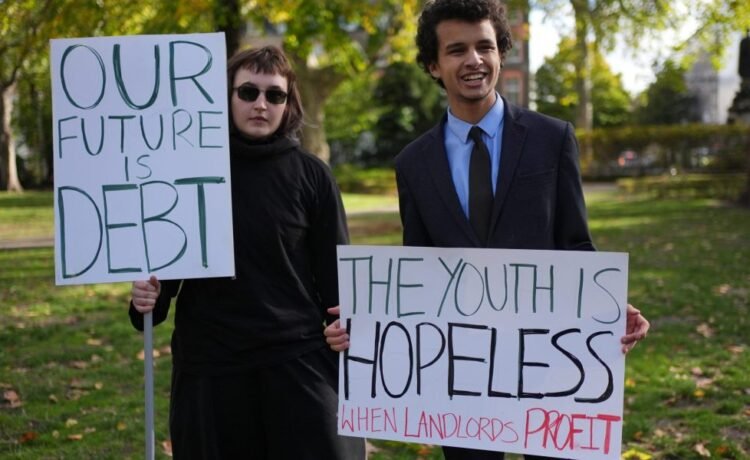
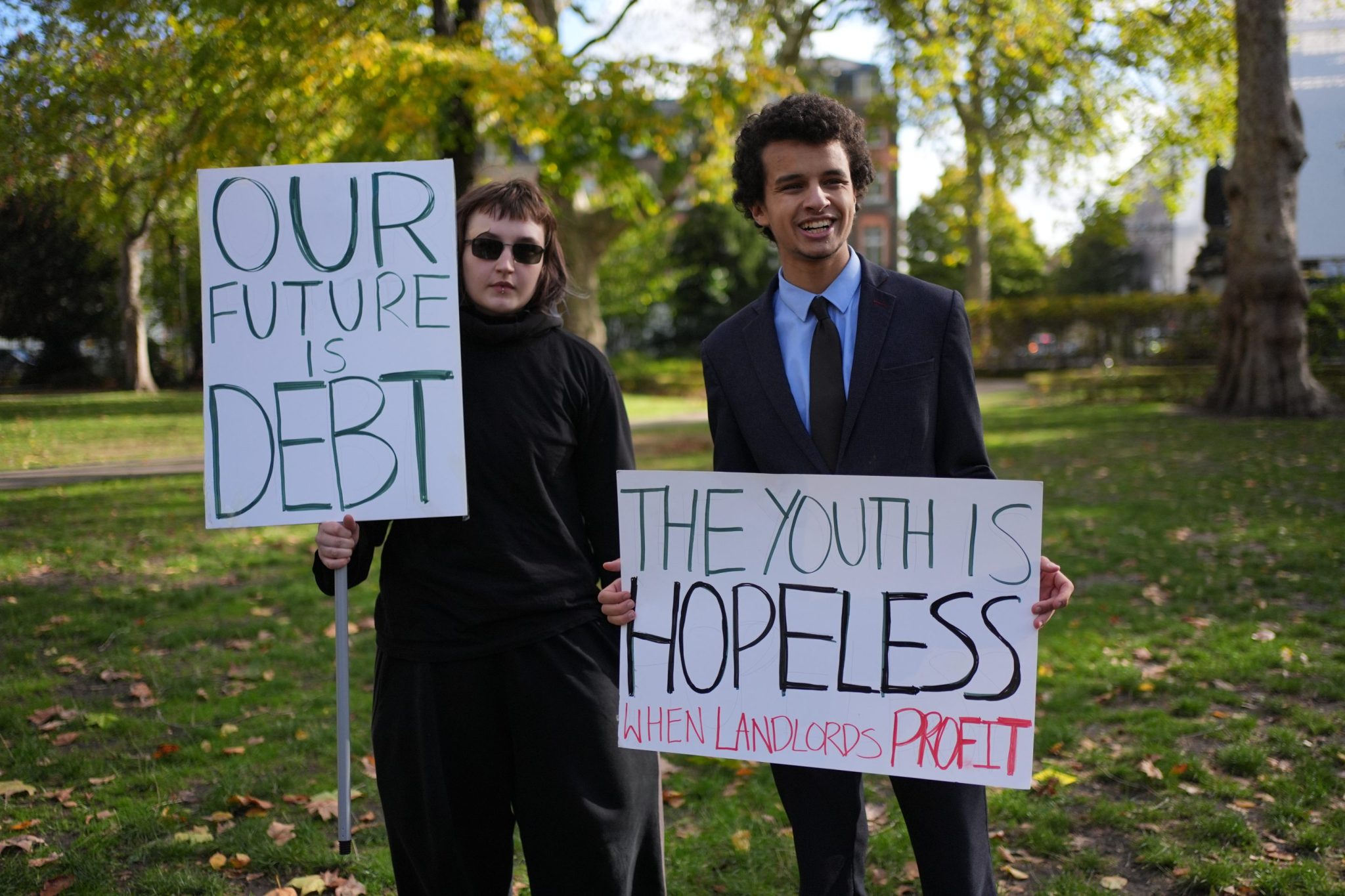
The other complicating factor is that when you ask what Gen Z means by socialism, the answers sound a lot like the good old-fashioned American Dream: a home, a career, and a shot at getting rich. This vote, then, offers a checkup of sorts from the most disillusioned Americans on whether the American Dream is surviving into the 2020s, or what the new version of it—even a socialist one—might look like.
The 21st century Horatio Alger American Dream
In 1868, about 60 years before “the American Dream” took hold as a concept during the Great Depression, Horatio Alger’s Ragged Dick became a smash-hit novel that summarized the American rags-to-riches story. Dick, a New York City shoeshine boy, works hard and saves his pennies, but his big break comes when he saves a rich man’s son from drowning and is rewarded with a job in the man’s office.
Carol Graham, a senior Brookings fellow and University of Maryland professor who has spent two decades measuring hope and despair, thinks the way Americans tell this story is part of the problem.
“Even the old famous Horatio Alger story, he had a benefactor,” she told Fortune earlier this month. “And they never talk about that when they tell the story.”
For about 30 years after World War II, the government and big employers played the Ragged Dick rich man part for baby boomers and their parents. The GI Bill, federally backed mortgages, and companies that planned to keep you for 40 years vaulted a whole generation into a new level of broadly shared economic prosperity.
“The middle class was constructed in the ’40s,” said Misael Galdámez, data manager at the Living Wage Institute, who has been working to understand just what happened to the middle class over the last half-century or so. “So if you want a middle class for the 21st century, it’s also something that needs to be constructed through policy, through employer investment.”
That’s roughly what young people mean when they say socialism, according to Graham, who started her career making the case for market reforms in Latin America and isn’t scandalized by the word. Gen Z is describing “progressive attitudes about everything from diversity and inclusion to safety nets to being able to afford housing,” she told me in a follow-up email.
Philipp Carlsson-Szlezak, Boston Consulting Group’s global chief economist, put an even finer point on it in a separate statement to Fortune. By a strict definition, he pointed out, not even European economies like Sweden or Norway are socialist, but “capitalist systems” with features including individual ownership, price competition, and decentralized decision making, even as they “choose to divert significant income to soften capitalism’s edges.” That choice doesn’t make them socialist by definition.
When Gallup asked the question in 2019, about half of young adults viewed socialism positively, but 83% felt good about “free enterprise.”
A home
“Gen Z definitely sees owning a home as less attainable,” Galdámez told Fortune.
His group’s living-wage data shows the share of workers earning enough to support a family fell from 47% to roughly 43% between 2021 and 2025. Now it’s building an index of what a middle-class life costs, county by county, and he expects two surprises when it comes out: “how high the level of income needed to actually support what people think of as a middle class life is,” and “how few people actually have it.” People are already adjusting the dream down, he said, and now they’re “less likely to say in order to be middle class, you need to own a home.”
Housing costs are the top political issue for voters 18 to 34, a CNBC poll found, and the country is short about 4 million homes, by Realtor.com’s count.
Carlsson-Szlezak doesn’t buy it. Millennials are catching up with Gen X’s homeownership rate in their early 40s, he wrote, and could get there sooner by moving to the suburbs. Hold home size constant, and affordability “has not fallen nearly as much” as the headline numbers suggest.
“I’m not sure when it became a baseline expectation to own a home at age 24,” he said, noting someone willing to build their career in, say, upstate New York has that option. “I don’t think it was ever feasible in NYC and never will be.”
A career
The second promise was a job that turned into a career. MIT labor economist Paul Osterman, whose book was covered by Fortune in September, found young people want that as much as their parents did.
“The desire to get a real job and have a career? That’s stable,” he said.
The supply is what changed. He counts 35% of the American workforce, more than 55 million people, in what he calls “disposable” jobs, and traces the devolution of middle-class status to the iconic 1981 moment when then-President Ronald Reagan fired over 11,000 air-traffic controllers. Former President Joe Biden swore in 2022 he was “sick and tired of trickle-down economics,” and young men largely pulled the lever for Trump anyway two years later. Now Osterman expects AI to cut “hiring for entry level jobs and so young people will be more affected than others.”
A dark theory has increasingly taken hold about the 21st century version of the Alger story: elite overproduction. Peter Turchin, the University of Connecticut professor emeritus who founded the field of cliodynamics, has argued in several books that societies throughout history fall into crisis when they create more credentialed strivers than they have good seats for. This week, he told Fortune the “growing unemployment/underemployment of university graduates and those with advanced degrees” is one of the trends to watch. The New York Fed found 42% of recent graduates underemployed in June, working jobs that don’t need the diploma.
Carlsson-Szlezak sees a generation adapting. The mid-20s were always precarious, he wrote: “That’s true today and was true of every prior generation, too.” Getting ahead now takes “more nimbleness, more career-switching and risk-taking, more hustle,” and “Gen Z appears to be doing that.”
A shot at getting rich
In January, Treasury Secretary Scott Bessent said young Americans were warming to socialism because they aren’t invested in the stock market. Their investments are more in things like whether the Jets cover the spread.
Gen Z made up 48% of online betting activity among Bank of America’s customers in July, my colleague Cat Gioino reported, and the bettors got back less than 75 cents on the dollar. Gen Z was twice as likely as other Americans to call betting an investment. The legal betting boom also pulled in young, college-educated men who had mostly stayed away from gambling, Cat found, which is about as close to Turchin’s surplus strivers as data gets.
Graham said that on a 0-to-10 hope scale, she put the 24-year-old moving retirement money into a sportsbook “closer to 3 or 4 than 8 or 9,” a “whatever” attitude nearer to despair.
“For one, it is not a good choice,” she told Fortune. Frustration over a lack of agency, she added, eventually “goes from being a possible motivational factor to a hope eroding factor.” Carlsson-Szlezak points to the market doing what it does, more than a grand theory of hope or despair: “You simply couldn’t bet and speculate as freely and easily before, whether that’s Crypto or Kalshi.”
The quieter bets look a lot like their grandparents’. Galdámez said “most of the Gen Z folks that I know are much more into saving for retirement.”
A house, a job that pays, a business with your name on it: the wish list is about as bourgeois as it gets.
Turchin himself declined to make a conclusion about Gen Z’s socialist tendencies, pointing to economic fundamentals when reached by Fortune, and saying Trump is failing the bourgeois wishlist test.
“Trump/MAGA have failed to improve the well-being of common Americans, instead involving [the] USA in a losing war with Iran,” he told Fortune. Other counter-elites could seize the opening, he added, maybe the DSA, but that is more likely to come in the next presidential election, in 2028. Past that, “we are in a highly unpredictable environment, with highly variable possible outcomes. I realize that you would prefer a more definitive forecast, but I don’t have such one for you.”
Fortune asked Graham who plays Dick’s benefactor for Gen Z now. Rich kids get one through their parents, she wrote, “and my guess is that there are not too many benefactors just hanging out.”