


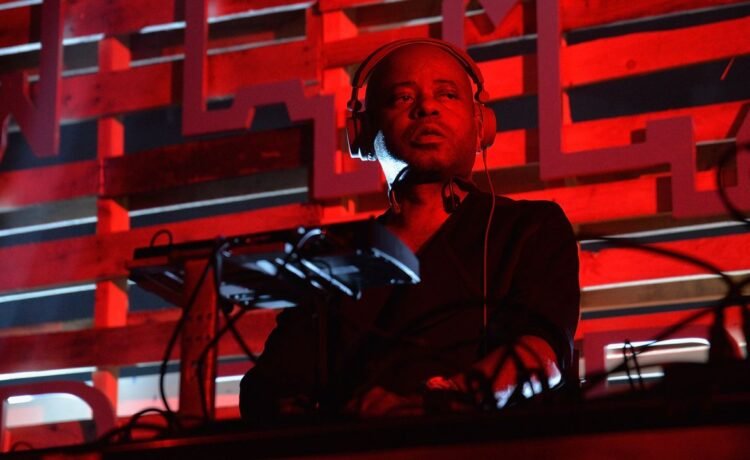
Juan Atkins, the lifelong producer and DJ who co-founded Detroit techno music, has died; Green Smith Artists, Atkins’ management company, confirmed his death. Atkins was slated to perform at Yu Yu Club in Mexico City last night (October 31). He was 64.
As a member of the Belleville Three, Cybotron, and Borderland, Atkins’ impact on electronic music is, at this point, incalculable. By age 18, he had formed Cybotron with his friend Richard “3070” Davis. By merging funk, electronic instrumentation, and futuristic themes, they helped redirect the genre’s sound with their early singles—“Alleys of the Mind,” “Cosmic Raindance,” “Cosmic Cars,” “The Line”—before fully dominating the dancefloor with “Clear” in 1983. The electro track became an instant underground hit and soon broke into the mainstream. The single sold 50,000 copies and became a genre-defining composition, famously sampled by Missy Elliott and countless others. The duo went on to release three albums: 1983’s Enter, 1993’s Empathy, and 1995’s Cyber Ghetto.
As a born-and-raised Detroiter, Atkins was part of the community’s local music scene at an early age, playing in funk and garage bands with his friends and being raised by a father who worked as a concert promoter. After meeting Derrick May and Kevin Saunderson in junior high school, Atkins shifted his focus from guitar and bass to digitized instruments, purchasing his first-ever synthesizer, a Korg MS-10, when he turned 15. The friends later earned the nickname the Belleville Three due to their close-knit status as collaborative musicians shaping their electronic scene and sharing equipment, studio space, and production work.
For Atkins, there was more to it than just making people get lost in the trance of dancing. “My lyrics are supposed to make you think about something other than shaking your booty on the dancefloor and falling in love,” he recently told The Guardian. “I feel like artists have an obligation to say something meaningful.”
In 2005, Atkins told Pitchfork that he “always called the music [he] was making techno music” despite DJs in the neighboring Chicago scene, like Derrick Carter and Frankie Knuckles, labeling it Detroit house music. “When you listen to Chicago records, a lot of them sounded like Philly International records,” said Atkins. “They were always like the Philly International disco sound. Going ‘ks-ks-ks-ks…’ you know! That’s the whole difference. In Detroit, we don’t have any real reference point. All the Detroit stuff was pure futuristic. The only thing that we really had in common was the form… There was definitely competition between the Chicago and the Detroit DJs. We all wanted to be famous. But we were also friends, Tyree Cooper and all of these guys. Farley was a good friend. We went to Farley in Chicago just to hang out and they came to Detroit.”