


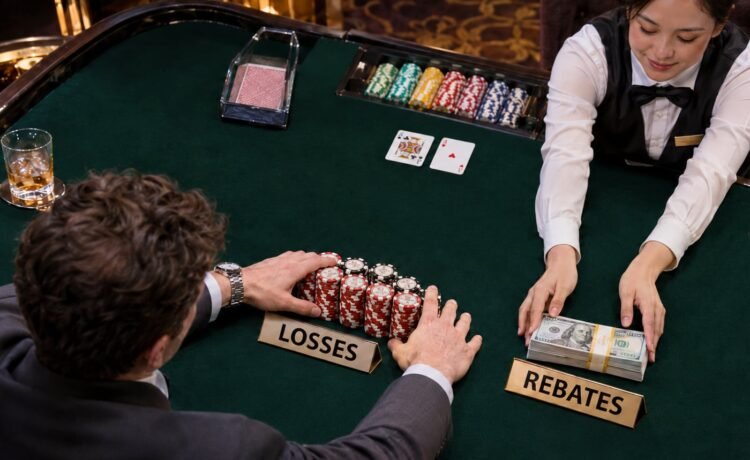

You know about the perks casinos give big gamblers for their play, and you may have heard the biggest players get “discounts” or “rebates,” cash back for their losses.
But it’s likely you haven’t seen the numbers until now. That’s because we’ve never seen the numbers until now, and we claim to know everything.
We got our hands on a confidential document that shows what “whales” get back in cash for their play, and it’s an eye-opener. Gird your loins.
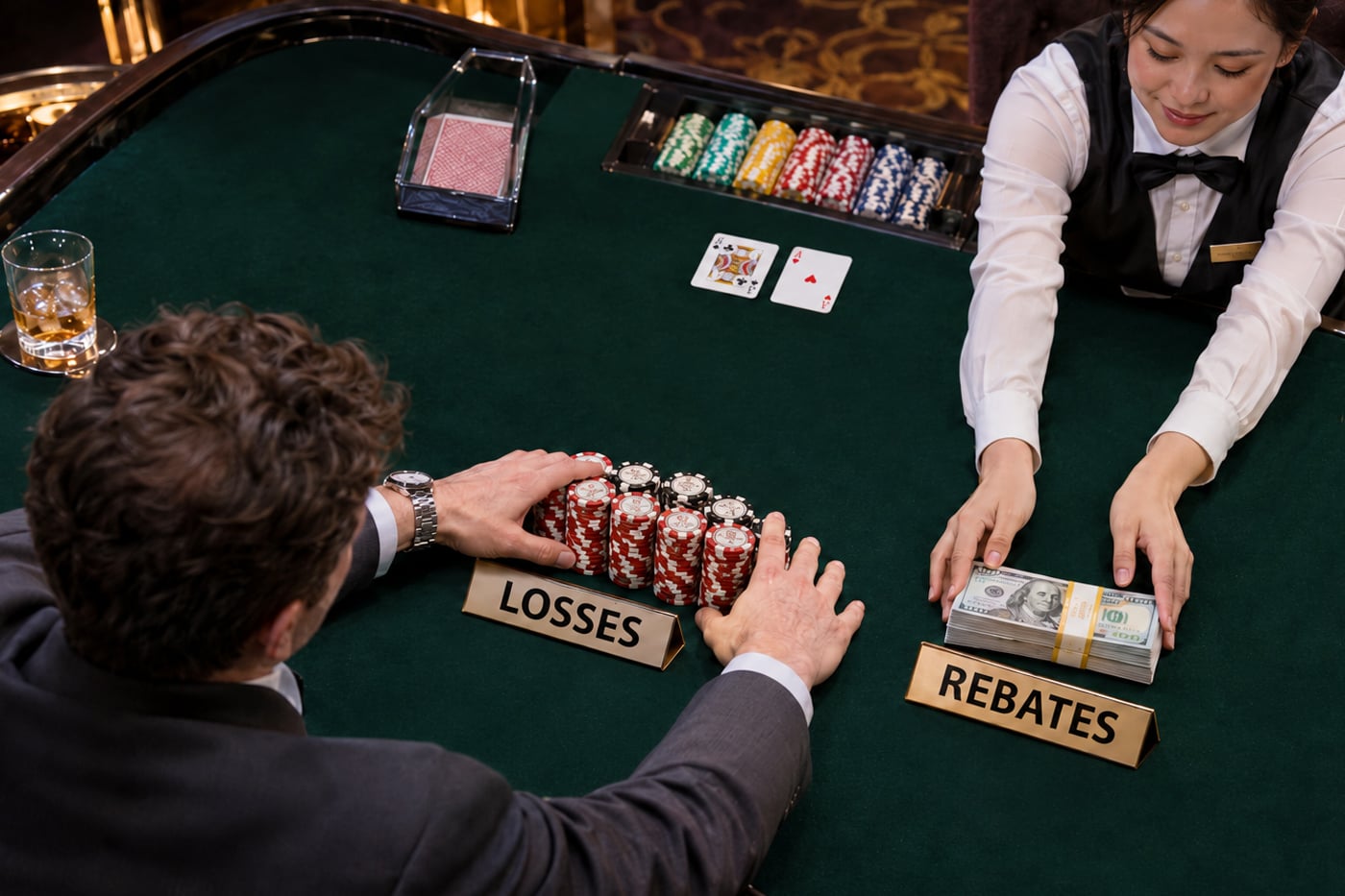
Gamblers get all kinds of perks to get and keep their business.
They get free rooms, meals, show tickets and tons of other goodies. We get a free gift every week from Ellis Island. Last week was a rice cooker. It was pretty sweet.
But big players get something the rest of us can only dream about: Food storage containers. Kidding! They get part of their gambling losses back.
These arrangements are called “DOLs,” or “discounts on loss.”
But how much do they get back, exactly?
An internal casino document reveals all. This is the schedule used at a specific casino, but the numbers are standard across Las Vegas, from what we’ve been told.
The document, titled “Airfare/Discount Policy,” lays out a sliding scale of discounts based on losses.
Here’s the breakdown: $25,000 loss, 3% discount ($750 returned); $50,000 loss, 3% discount ($1,500 returned); $100,000 loss, 8% discount ($8,000 returned); $200,000 loss, 10% discount ($20,000 returned); $300,000 loss, 12% discount ($36,000 returned); $400,000 loss, 13% discount ($52,000 returned); $500,000 loss, 15% discount ($75,000 returned); $1 million loss, 17% discount ($170,000 returned); $2 million loss, 23% discount ($460,000 returned).
Here’s the document in question.
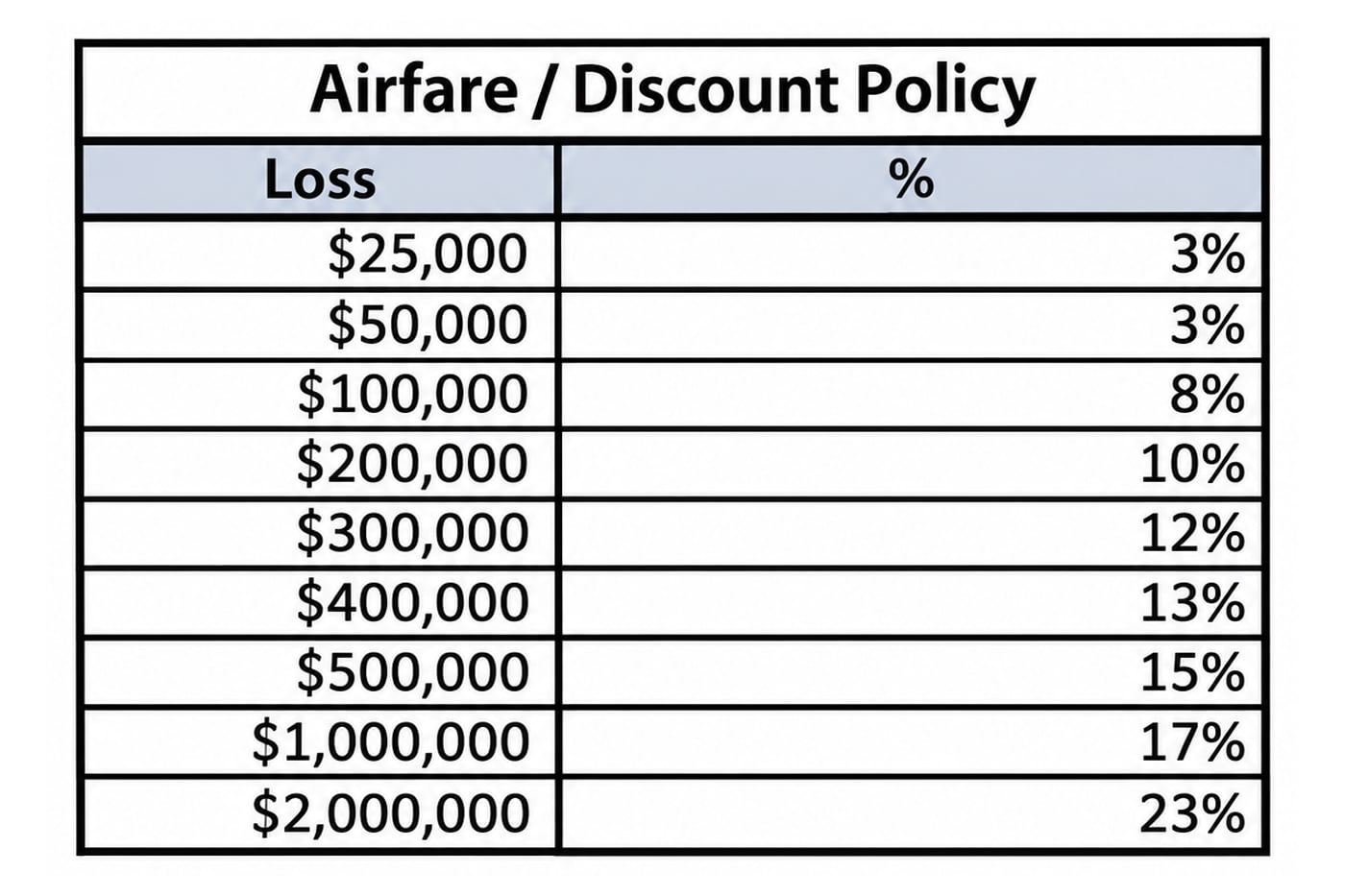
We told you to gird. A gambler who loses $2 million could receive $460,000 back.
Suddenly, losing $2 million doesn’t seem quite so bad!
It’s a joke. It’s still very painful. But rebates are like aloe on a burn. They help with the sting.
So, why would casinos give back so much money? Answer: Because they want more of it.
Casinos compete fiercely for high rollers, and big players know their value. That’s why they negotiate things like luxury suites, private transportation, expensive meals, private jets and loss rebates before they play.
If the player loses, the casino reduces the loss by the agreed amount. If the player wins, the player keeps the winnings.
It sounds one-sided, because the casino doesn’t get a discount if the player wins. That’s because the casino has a built-in mathematical advantage. Over time, the outcome is pretty much inevitable. The player will lose.
The whole arrangement is fascinating because while it’s likely the casino will prevail, it’s not guaranteed. A player can win. In the case of rebates, a player could use the casino’s rebate to win back everything they lost and more. It happens all the time.
Casinos use “theo,” or theoretical win (or theoretical loss) to decide how much revenue a player will generate. It’s based upon the game (and its house advantage), the average wager and amount of play.
A player who loses $500,000 in 20 minutes may not generate enough theoretical win to justify a $100,000 rebate, especially if the player could just as easily have won. Longer play gives the house advantage more time to work, while a few big wagers followed by an immediate exit create greater risk.
Dana White is a good example of this dilemma. He gambles a lot, like $1 million on a single hand of blackjack, for short periods of time. That’s a lot of exposure for a casino. They need time.
Fun story. In 2011, professional gambler Don Johnson (no relation) won more than $15 million playing blackjack at three Atlantic City casinos. Atlantic City is a lot like Las Vegas, but with a hacking cough.
Anyway, Johnson negotiated favorable blackjack rules and loss rebates of 20%. He improved the value of his bets by negotiating terms that made the casinos absorb part of his losses while allowing him to keep his winnings. Here’s a nerdy deep dive into how this worked.
Johnson’s story became a cautionary tale for casinos: The most dangerous player may not be the one who knows how to beat the game, but the one who knows how to negotiate the deal.
Back to our leaked document!
The original document says, “No discounts in dice play,” which means craps losses don’t qualify for discounts. It also says, “In the event of multiple play; discounts less any losses from craps.” (Meaning if the guest plays different kinds of games, craps losses are excluded from the casino’s calculations.) That’s because craps has a low house edge. The odds bet, for example, has no house advantage. The odds bet is so beneficial for players, you won’t find it printed on a dice table’s felt. Big tell.
Oh, about “airfare.” In high roller circles, “airfare” isn’t about a plane ticket. It’s the term used for discounts on losses. The term is a holdover from a time when casinos offered airfare allowances to attract wealthy customers. Casinos still pay for transportation, but “airfare” refers to cash back deals for players in general these days.
Now you know how the other half lives. The K-shaped economy is alive and well in Vegas, and the world is your oyster if you’re in the right fork of the K. Otherwise, you’re just forked.